What Is Generative Engine Optimization (GEO) and AEO?
Learn how GEO and answer engine optimization relate to SEO, then use mentions, citations, prompts, and source pages to measure AI-search visibility.
In this guide
Generative engine optimization, usually shortened to GEO, is the work of making a brand and its information easier for AI answer systems to find, understand, and cite. Answer engine optimization, or AEO, is a closely related term. In practice, both depend on the same fundamentals as good search work: accessible pages, clear answers, credible evidence, and a site that deserves to be referenced.
The important difference is what you measure. Traditional SEO tracks pages and rankings. AI visibility research also looks at brand mentions, cited sources, and the questions that lead to those answers.
That does not mean GEO replaces SEO. A page that search engines cannot crawl, understand, or trust is unlikely to become a reliable source for an answer engine either.
GEO, AEO, and SEO in plain language
SEO improves how a site appears in conventional search results. The usual evidence includes rankings, impressions, clicks, indexed pages, crawl health, and links.
AEO focuses on whether content directly answers a question. That can include featured snippets, voice answers, search-result answers, and AI-generated responses.
GEO focuses more specifically on generative systems: whether the system mentions the brand, which sources it cites, and whether the site's information helps shape the response.
The labels overlap. A sensible team does not need three separate content strategies. It needs one useful publishing system and a measurement layer that covers both rankings and AI answers.
What an AI visibility tool can actually measure
AI answers change with the prompt, platform, available sources, market, and time. No single score can describe the whole picture. Useful evidence includes:
- whether the brand appears in supported answer data
- the questions connected to those appearances
- which pages and domains are cited
- whether competitors appear for the same category questions
- repeated observations from a deliberately chosen prompt set, where the platform supports them
FlexQueries keeps those details visible. The AI Visibility hub covers one-time brand checks, prompt research, citations, and scheduled monitoring. The ChatGPT Visibility Checker prepares a brand or domain check that continues after sign-in. The app shows the paid action estimate; eligible new accounts receive $1 toward usage. Brand monitoring covers ChatGPT and Google, while individual prompt-response research also supports Claude, Gemini, and Perplexity.
Coverage is never universal. A missing mention means the brand was not present in the available data for that check. It does not prove that no user, prompt, or model has ever produced a different answer.
Start with questions tied to real decisions
Generic prompts create generic reports. Begin with questions that a customer, buyer, journalist, or practitioner might genuinely ask:
- Which product is best for a defined use case?
- What are the alternatives to a familiar tool?
- How does a process work?
- Which provider serves a particular location or industry?
- What should someone check before buying?
Use keyword research, Search Console queries, sales conversations, and support questions to find this language. Then group the questions by intent. A category comparison should not be mixed with a troubleshooting guide simply because both mention the same product.
This step keeps AI visibility work connected to demand. It also produces pages that remain useful if answer-engine traffic changes.
Publish pages that are easy to verify
An answer engine needs material it can interpret and attribute. Make important claims easy to check:
- Answer the main question early in the page.
- Use specific headings that match the decisions covered below them.
- Support factual claims with first-party evidence or reliable sources.
- Name the author, company, product, and update date where those details matter.
- Keep pricing, limits, and comparisons current.
- Link to the deeper page that supports a short summary.
Avoid manufacturing dozens of near-identical pages around slight keyword variations. One complete page that satisfies a clear intent is more useful than a family of thin rewrites.
Structured data can clarify the entities and page type, but it cannot rescue weak content. Add schema when it accurately describes what a visitor can see. Do not mark up reviews, prices, questions, or organizations that are not actually present on the page.
Keep the technical layer dependable
Before thinking about AI-specific tactics, verify the normal technical requirements:
- public pages return a successful response
- canonical URLs are consistent
- robots rules do not accidentally block the content
- important pages are linked from the site
- sitemaps include the canonical URLs
- metadata describes the visible page
- JavaScript does not hide the core answer from crawlers
Run a site audit when a launch, migration, template change, or indexing problem makes those checks necessary. Google says its AI features use the same SEO fundamentals: there is no extra technical requirement, special schema, or new machine-readable file needed for eligibility. Do not treat an llms.txt file as a requirement or a guarantee of inclusion.
Measure the work without chasing every answer
Choose a small, stable prompt set for the questions that matter to the business. Record the brand, competitor set, platform, market, and check date. Track mentions and citations alongside the search metrics already used by the team.
When visibility changes, inspect the evidence before drawing a conclusion:
- Did the prompt or market change?
- Did the cited pages change?
- Was the brand replaced by a competitor?
- Did the page lose rankings or links at the same time?
- Was the result based on incomplete platform data?
One check is a snapshot. Repeated observations under comparable conditions can reveal a pattern, although answers may still vary. FlexQueries schedules brand visibility monitoring for ChatGPT and Google. Individual prompt responses are a separate research workflow; the brand-monitoring schedule does not automatically rerun an arbitrary prompt set across every provider.
Separate mentions, citations, and visits
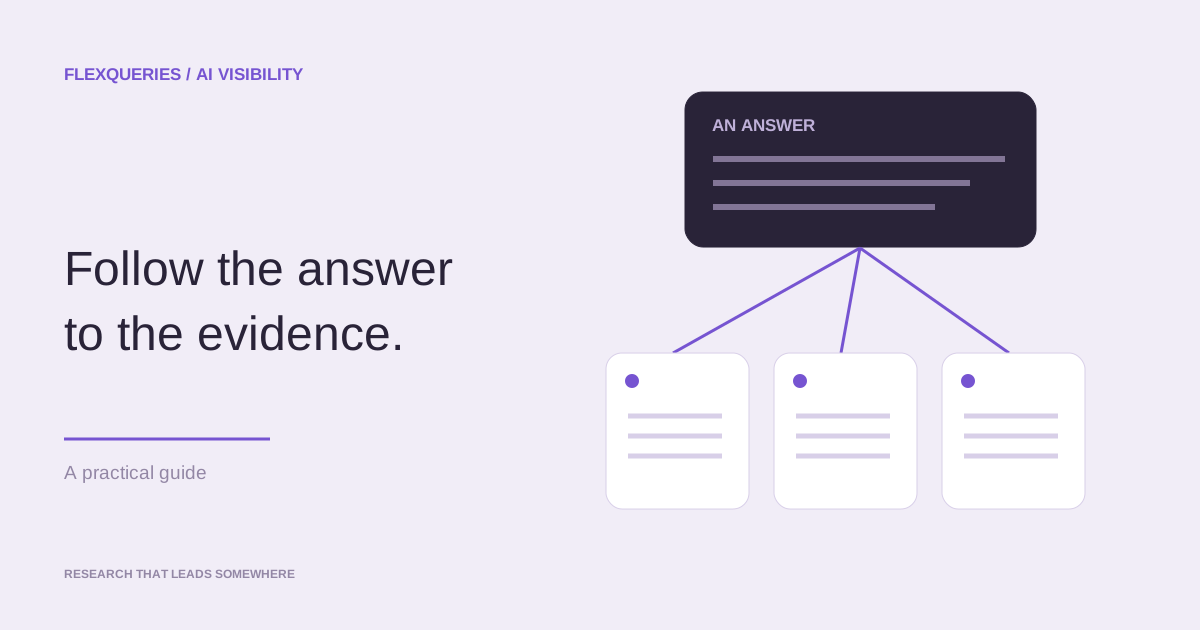
A brand mention answers "was the name present?" A citation answers "which source did the response link to or reference?" A visit requires traffic evidence. These measurements can move independently.
For example, an answer might recommend a product but cite a comparison site. That is a mention for the product and a citation opportunity for the publisher. Another answer might cite the product's documentation without recommending the product. Neither observation proves that anyone clicked through.
Keep a review sheet with the exact question, platform, date, returned answer, mentioned brands, and cited URLs where available. Mark a failed request or unavailable field as missing data, not zero visibility. When comparing competitors, apply the same prompt and conditions to the set.
| Observation | A useful follow-up | What it does not prove |
|---|---|---|
| Brand mentioned; another site cited | Inspect how that source describes the product. | That the mention produced a visit. |
| Your page cited; brand absent | Check whether the answer used a fact or explanation from the page. | That the product was recommended. |
| No mention in one response | Repeat relevant questions under recorded conditions. | That the brand never appears on the platform. |
| AI referral recorded in analytics | Review the landing page and measurable next actions. | That every AI-assisted journey is attributable. |
Choose the FlexQueries workflow that matches the question
The workflow matters more than a headline visibility score. Use brand lookup to investigate a brand or domain in supported mention data. Use prompt-response research when you need an answer to a specific question. Use scheduled brand monitoring when comparable brand observations are useful over time.
Brand monitoring currently covers ChatGPT and Google. Prompt responses support ChatGPT, Claude, Gemini, and Perplexity. Those provider lists describe different capabilities; a Perplexity prompt response is not a Perplexity brand-monitoring subscription.
These actions use the same pay-as-you-go account balance. Estimates depend on the request and returned data, so the cost of one small lookup is not an all-inclusive monthly price for AI visibility. Review the selected work in the app, and agree a research scope before an external MCP client runs paid calls.
For a first project, choose three questions from a real buying conversation. Inspect the answers and cited pages, correct one outdated claim on your own site, and record a later recheck. You will learn more from that traceable exercise than from treating a changing answer as a universal ranking.
A practical GEO and AEO workflow
Use this sequence for a focused project:
- Collect customer questions from keyword research, Search Console, sales, and support.
- Choose the questions that map to a real page or buying decision.
- Check the current search results and supported AI-answer data.
- Review the pages and domains being cited.
- Improve or publish the page that can answer the question with the strongest evidence.
- Fix crawl, metadata, internal-link, and schema problems that prevent clear discovery.
- Recheck the same prompt set after the work has had time to be discovered.
- Keep the pages useful and current even when the measurement does not move immediately.
The goal is not to manipulate an answer engine into repeating a slogan. It is to make the best available information easy to find, quote, and verify.
Common questions
Can GEO guarantee that ChatGPT mentions my brand?
No. Platforms choose their own answers and sources, and results vary. GEO can improve the quality, accessibility, and evidence behind your pages. It cannot guarantee a mention or citation.
Is AEO different from GEO?
The terms emphasize different surfaces, but the work overlaps heavily. AEO is the broader practice of preparing content for direct answers. GEO usually refers to generative AI answers. Both benefit from technically sound, well-sourced pages.
Do I need a separate AI content strategy?
Usually not. Start with the customer questions and pages already important to search, sales, and support. Add AI mention and citation measurement to that system instead of creating a second publishing operation.
How often should AI visibility be checked?
Use a frequency that matches the decision. A one-time market check may be enough for research. A small commercial prompt set may justify weekly or monthly monitoring. More frequent checks are not automatically more useful.
Where should I start?
Run the ChatGPT Visibility Checker for a brand or domain, inspect the returned prompts and cited pages, then continue in the AI Visibility workspace if the questions are important enough to monitor.
Try the workflow with your own site, then use the results to decide what deserves your attention.
Explore the SEO tools